Dishwasher Not Cleaning Dishes? Common Texas Causes & Fixes
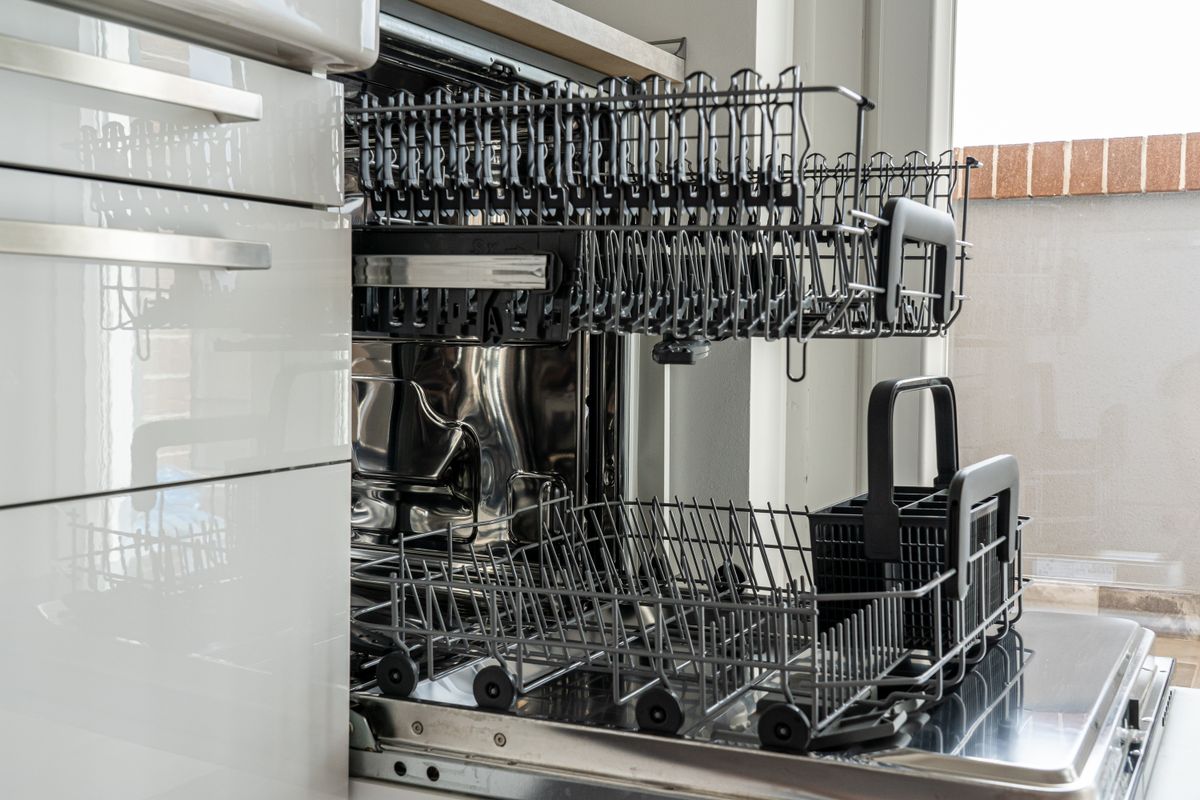
Quick answer: When a dishwasher leaves dishes dirty in Texas, the cause is almost always one of four issues: blocked spray arm holes from hard water mineral buildup (40% of cases), wrong detergent type or amount (25%), clogged filter at the bottom of the tub (20%), or incoming water not hot enough (15%). All four are addressable without a service call.
The Hard Water Reality in Texas
Most of Texas has water with calcium and magnesium content far above the national average. San Antonio's Edwards Aquifer water averages 250 mg/L total hardness. Dallas-Fort Worth water typically runs 150–200 mg/L. Houston is moderate at 80–120 mg/L. By comparison, "soft water" is defined as below 60 mg/L.
This hardness causes specific dishwasher problems that aren't really "dishwasher problems" — they're "Texas water problems" that manifest in your dishwasher:
- White film on glassware after each cycle (calcium deposits)
- Spotted dishes even after using rinse aid
- Cloudy glasses that don't clean with any amount of detergent
- Visible scale buildup inside the dishwasher tub
None of these problems mean your dishwasher is failing. They mean you need to adjust your approach to dishwashing in Texas hard water.
The 5-Step Fix Process
Step 1: Clean the Filter at the Bottom
Open the dishwasher, remove the bottom rack. Look at the bottom-center — there's typically a removable filter (cylindrical or flat mesh). Twist or lift to remove. Rinse under hot tap water with a stiff brush to remove food debris, grease, and mineral buildup. Reinstall.
Most homeowners never clean this filter. After 6+ months of use, the filter can be so clogged that water can't drain properly during the wash cycle, recirculating dirty water back over your dishes. This single step solves about 30% of "dishes not getting clean" complaints.
Step 2: Unclog Spray Arm Holes
Dishwashers have two or three spray arms with 20–40 small holes each that direct water at your dishes. In Texas hard water areas, these holes progressively clog with mineral deposits.
- Remove the lower spray arm by lifting or unscrewing (varies by brand)
- Examine each hole under good light. Holes should all appear uniform in size.
- Any hole that looks smaller or blocked: clear with a toothpick or thin wire
- Soak the arm in white vinegar for 30 minutes to dissolve remaining mineral buildup
- Repeat for the upper spray arm (and middle arm if your unit has one)
Step 3: Run a Vinegar Cycle
Empty the dishwasher completely. Place 2 cups of white vinegar in a glass bowl on the top rack. Run the hottest cycle available (usually "Sanitize" or "Pots & Pans") with no detergent. This dissolves mineral buildup inside the entire system — pump, hoses, heating element, tub walls.
Do this monthly in hard water areas. The cost (a $3 bottle of vinegar per year) is dramatically less than repair costs from mineral damage.
Step 4: Check Your Detergent and Rinse Aid
Texas hard water requires more aggressive cleaning chemistry:
- Use a detergent rated for hard water. Cascade Complete, Finish Quantum, or Persil ProClean Plus have stronger anti-scaling formulas than basic detergents.
- Use the right amount. Most homeowners use too much detergent. Modern HE dishwashers need 1–2 tablespoons per load, not a full cup. Excess detergent leaves residue that looks like dirt on dishes.
- Always use rinse aid. In hard water areas, rinse aid isn't optional — it's essential. Refill every 4–6 weeks. Lemi Shine Booster (Texas-specific brand) is exceptionally effective.
- Consider dishwasher salt if your unit has a salt reservoir (Bosch, Miele models). Salt regenerates the built-in water softener in these units.
Step 5: Verify Water Temperature
Dishwashers need hot water — ideally 120–125°F at the inlet. If your water heater is set too low or you're running dishes right after using hot water elsewhere, the dishwasher gets cold water and detergent doesn't dissolve properly.
Quick test: run the kitchen sink hot water for 30 seconds before starting the dishwasher. This pre-fills the line with hot water. If this dramatically improves cleaning results, you've identified the issue.
When DIY Doesn't Solve It
If you've completed all 5 steps and dishes still aren't clean, the issue is mechanical:
- Failed heating element ($140–$260): Dishwasher fills but can't heat water to proper wash temperature. Symptoms: dishes wet at end of cycle, cold to touch.
- Failed circulation pump ($190–$340): Reduced water pressure at spray arms. Symptoms: spray arms barely spin or don't rotate properly.
- Failed wash motor ($300–$500): Complete failure of water circulation. Symptoms: dishwasher sounds different, no water movement audible.
- Blocked water inlet valve ($120–$220): Reduced fill water. Symptoms: dishwasher takes longer to fill, very low water at bottom of tub.
Brand-Specific Notes
- Bosch: Uses a built-in water softener (salt-fed). If your Bosch isn't cleaning well, the salt reservoir may be empty.
- Miele: Premium hard-water cleaning, but proprietary cleaning agents recommended for best results.
- KitchenAid / Whirlpool / Maytag: Standard hard-water performance. Hard-water detergent makes a significant difference.
- Samsung / LG: Generally good cleaning but spray arm holes are smaller and clog more easily in Texas hard water.
- GE / Frigidaire (budget tier): Most affected by hard water. Annual professional descaling recommended.
Long-Term Prevention Strategy
If you live in a high-hardness Texas region (San Antonio, Lubbock, Midland, or West Texas), three investments dramatically reduce dishwasher cleaning problems:
- Whole-house water softener ($1,500–$3,000 installed): Removes hardness from all home water. Pays back through extended appliance life and reduced cleaning chemical costs.
- Point-of-use softener under the kitchen sink ($150–$400): Cheaper option. Provides softened water to the dishwasher specifically.
- Reverse osmosis system ($300–$700 installed): Eliminates virtually all minerals. Combined with rinse aid, produces spot-free results.
If after these steps your dishwasher still isn't cleaning properly, the issue is mechanical. Call (877) 670-1060 for professional dishwasher repair. Related: how Texas hard water affects dishwashers and dishwasher not draining guide.
The One-Week Test Before You Call
If your dishes are filmy rather than food-soiled, run this one-week test before booking a service call: add rinse aid, switch to a fresh box of detergent, increase the dose slightly, and run one monthly vinegar cycle. The large majority of Texas "dishwasher not cleaning" cases are hard-water chemistry, not mechanical failure, and resolve within a week of these changes at a cost of a few dollars. Only if dishes still come out genuinely dirty — food residue, not film — after this test is a mechanical repair likely warranted.
Why New Dishwashers Sometimes Clean Worse in Texas
Homeowners often report a new dishwasher cleans worse than their old one. In Texas this is usually not a defect: modern dishwashers use far less water and rely on sensors and longer cycles, which makes them more sensitive to hard-water interference and to being run on short or eco cycles. The fix is the same — rinse aid, adequate detergent, the right cycle, and hot water reaching the unit at the start. Understanding this prevents an unnecessary warranty call on a perfectly good machine.
Frequently Asked Questions
In Texas, the cause is usually one of four issues: blocked spray arm holes from hard water mineral buildup, wrong detergent type or amount, clogged filter at the bottom of the tub, or incoming water not hot enough. All four are addressable without a service call.
Cascade Complete, Finish Quantum, and Persil ProClean Plus have stronger anti-scaling formulas designed for hard water. Always use rinse aid (Lemi Shine Booster is particularly effective). Use less detergent than you'd expect — 1–2 tablespoons per load, not a full cup.
Monthly is ideal; quarterly minimum. Most Texas homeowners never clean the filter, which causes water to recirculate dirty during wash cycles. Filter cleaning alone solves about 30% of 'dishwasher not cleaning' complaints.
Usually yes, in high-hardness Texas regions. Whole-house softeners ($1,500–$3,000 installed) eliminate the root cause. Point-of-use under-sink softeners ($150–$400) are a cheaper alternative that softens water just for the kitchen.
Related Services & Resources
Need Professional Help?
If you're experiencing appliance problems in Texas, Home Sure Appliance Repair is here to help. Our experienced technicians provide fast, reliable repair service throughout the state.
(877) 670-1060